April 2008
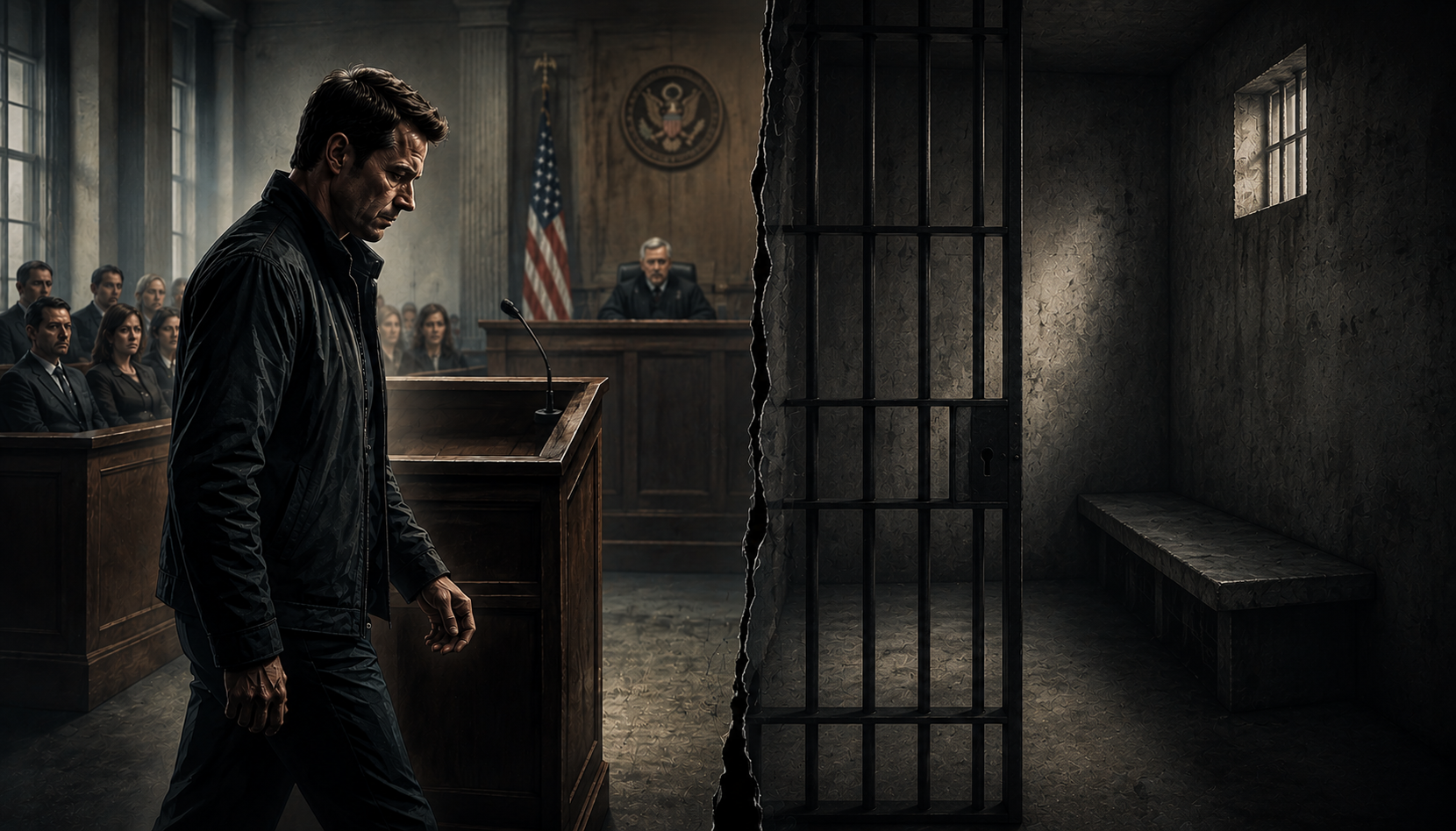
It was day three of the trial, and I was called to the stand. I felt like I was running towards the front of the courtroom, though I’m sure I was walking at a normal pace. I was so busy calculating: Can I break his neck before they reach me? How hard can it be? I know the answer. This was not a question about technique. It was a moral debate: what kind of man did I want to be at that moment?
In 2008, long before I was a father, long before I suspected I wasn’t okay, I had remarried and was running a business in Illinois. I was also involved in an ongoing murder trial that fully consumed my heart and my mind, and mentally, I was always in Denver.
I had spent four years flying back and forth to Denver three or four times a year for status hearings, competency hearings, psychological evaluation updates, and meetings with psychologists to discuss the merits of the case for PTSD, and finally, after four years, we went to trial.
It was the first time I had been together with Stacy’s family, at least since Christmas of 2004 in El Paso. It was a bittersweet reunion. Her family was my family. Her dad and sisters and brothers were the people who raised me as a young adult. You have this illusion that you’re grown at 18, 19, 21 even, but the reality for me, at least, was that I still needed someone looking out for me. From seventeen to twenty-five, they were a constant in my life, and then I had not seen them in three and a half years. And this was not a reason we wanted to gather, except it was.
We wanted justice.
Justice is such a cruel and abstract idea to dangle above a family’s head. Trials resolve nothing; the dead stay dead and the living endure.
I sat in the back row of the courtroom, my shoulder almost touching my father-in-law’s. We sat there so we could leave when signaled that they would show crime scene photos. Espinoza was on the other side of the courtroom, nowhere close and yet, entirely too close.
He was acting as his own attorney (pro se), and he could not sit still. He was constantly shuffling through papers, leaning into his microphone to question witnesses about the morning he waited for her in the breezeway, speaking out of turn and constantly being silenced by the judge.
Hearing him speak her name was like watching someone desecrate her grave.
I knew I would be called as a witness; I had spent four years practicing for that exchange, making sure I would show no emotion when I had to answer his questions. I would never give him the satisfaction of seeing me break.
My views on capital punishment shifted drastically over four years. Growing up in Texas, in a very conservative Pentecostal home, you can rightly imagine that I was pro-death penalty. However, I came to believe that you shouldn’t really get a say in questions that big if you had not been affected. I hadn’t been able to die in the four years leading up to the trial; I didn’t want him to either, not now, not at any cost, never. I wanted him in jail, alive and alone with his thoughts.
Just like me.
For the four years leading up to the trial, his primary defense hinged on the idea that he had PTSD and was not responsible for his actions. He was in a house fire as a child, but that carried little to no weight with me, because so was I. Our family home burned to the ground when I was eleven years old. You didn’t hear me complaining about it.
I spent four years thinking about him when I would wake up, wondering if he was awake too. When I would sit on my back porch, drinking my coffee and having a cigarette, I would smile, knowing that he couldn’t do the same. I would think about how I could break him out of jail, because I had a better idea on how to punish him. I would spend a lot of time pondering PTSD and reading about trauma, and I would make a resolution that almost killed me.
I had decided that PTSD was not real and “trauma” was for the weak. I refused to be a victim, because the man who murdered my wife was playing one, and we could never be alike. I caught glimpses of his story in mine. I had looked close enough to see it, and I had slammed that door shut as hard as I could.
He could not walk free because I would never be free.
On the last day, the jury received the case. Despite the complexity of his insanity defense, his claims of PTSD and childhood trauma, they deliberated for only three hours.
The clerk handed the paper to the judge. I could feel the pulse in my neck beating against my collar as the silence filled the air.
I finally realized the jury foreperson was talking, but the first word I heard was.
Guilty.
I only heard guilty; it was my only concern. The word didn’t sound like a victory, however; it sounded like a heavy door latching shut. Relief and no relief at all, simultaneously.
Nothing had changed; she was still dead.
It would take ten more years for me to have any peace at all.
That peace didn’t arrive in a courtroom. It showed up in a jail cell, my own.
If I still have your attention, subscribe. It will not cost you anything. Also, leave a comment and share this with someone else if you think it would be helpful. You’ll get emails anytime I post anything new. If you want to read this entire story, you can pick up a copy of the book here.
The Digital Diatribe runs on coffee, hope, and dreams. The newsletter and subscriptions are free and always will be. If you would like to help keep the lights on so we can keep doing this, however, you could buy me a coffee: https://buymeacoffee.com/digital_diatribe
Thanks for reading and following me on this journey. As always, I look forward to your comments.
Leave a Reply